Managing Fleet and Equipment Maintenance in Drilling Operations
Introduction
Effective fleet and equipment maintenance is critical for drilling companies operating in demanding and high-risk environments. From drilling rigs to support vehicles, every asset must perform reliably to ensure safety, productivity, and compliance.
However, managing maintenance across a distributed fleet can be challenging without the right systems in place. This is why many drilling companies are turning to Computerised Maintenance Management Systems (CMMS) to streamline operations, especially for pre-start checks and preventive maintenance.
Challenges in Managing Drilling Fleets and Equipment
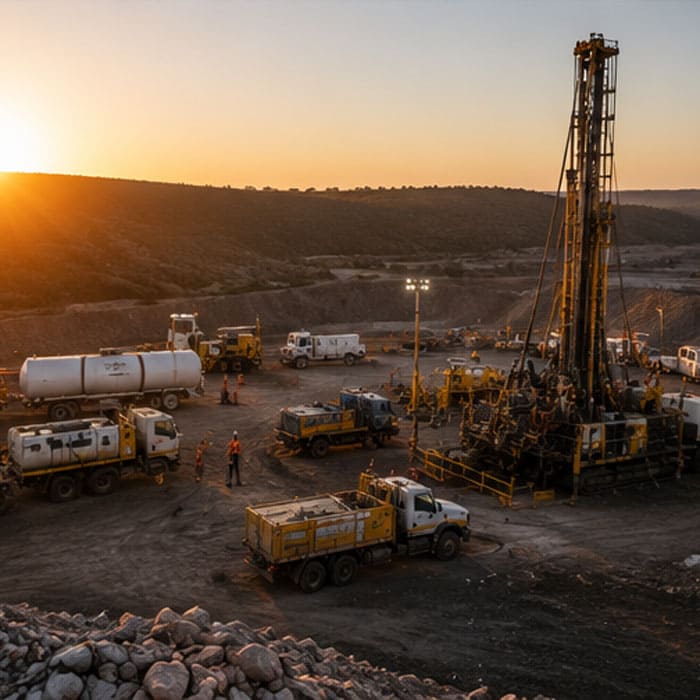
Drilling operations typically involve a mix of heavy equipment and mobile assets, often working in remote locations. Common maintenance challenges include:
- Lack of visibility into asset condition
- Inconsistent pre-start inspections
- Unplanned breakdowns and downtime
- Paper-based or manual tracking systems
- Difficulty scheduling preventive maintenance
- Compliance and safety risks
Without structured processes, these issues can significantly impact operational efficiency and safety.
The Role of Pre-Start Checks
Daily pre-start checks are essential for ensuring that all drilling equipment and vehicles are safe and ready for operation. These checks typically cover:
- Engine and hydraulic systems
- Safety features and controls
- Fluid levels and leaks
- Structural integrity of drilling rigs
- Tyres, brakes, and electrical components
Manual processes often lead to missed steps, incomplete inspections, or delayed reporting.
How CMMS Improves Fleet and Equipment Maintenance
A modern CMMS provides a centralised platform to manage maintenance activities across all drilling assets.
- Digitised Pre-Start Inspections
Operators can complete pre-start checks using mobile devices with standardised digital checklists, ensuring consistency across all sites.
- Automated Work Orders
If an issue is identified during an inspection, a work order is automatically generated and assigned to maintenance teams.
- Preventive Maintenance Scheduling
CMMS allows companies to schedule maintenance based on usage, hours, or time intervals, reducing reliance on reactive repairs.
- Real-Time Asset Visibility
Managers can monitor equipment condition, maintenance status, and fault reports in real time.
- Maintenance History Tracking
Each asset has a complete service history, improving decision-making and audit readiness.
Benefits for Drilling Companies
Implementing a CMMS for fleet and equipment maintenance delivers clear business benefits:
- Reduced Equipment Downtime
Proactive maintenance prevents unexpected failures.
- Improved Safety Compliance
Ensures all inspections and maintenance tasks are documented and auditable.
- Increased Equipment Lifespan
Regular servicing keeps assets in optimal condition.
- Better Resource Management
Optimises technician workload and spare parts usage.
- Enhanced Productivity
Minimises delays caused by equipment breakdowns.
Mobile Maintenance for Remote Operations
Drilling sites are often in remote areas where connectivity can be limited. A mobile-enabled CMMS allows:
- Offline data capture during inspections
- Instant syncing when connectivity is available
- Photo documentation of issues
- Real-time communication between field and office
This ensures maintenance workflows continue without disruption.
Best Practices for Managing Drilling Maintenance
To maximise efficiency, drilling companies should:
- Standardise pre-start inspection procedures
- Implement digital checklists for all equipment
- Schedule preventive maintenance consistently
- Track key performance indicators (KPIs) such as downtime and repair costs
- Use real-time data for decision-making
Conclusion
Managing fleet and equipment maintenance in drilling operations is complex but essential. By adopting a CMMS solution, companies can streamline pre-start checks, automate maintenance workflows, and improve overall efficiency.
In an industry where safety and uptime are critical, digitising maintenance processes is no longer optional—it's a strategic advantage.